Posted on 15/06/2016. Tags: Eurasie, Friedrich List, Sýrie, Novorusko, Rusko, Čína, Ukrajina, Halford Mackinder, USA, Saul B. Cohen, Robert Steuckers, Euro-Synergies
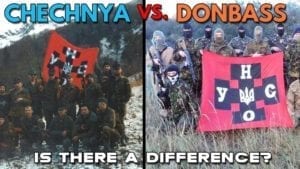
Geographic realities are stable and permanent. They actually matter and all the idealistic disguises created to wage useless wars or delaying wars (Carl Schmitt) are only ponderous parasitic burdens to blind the naïve.
Robert Steuckers
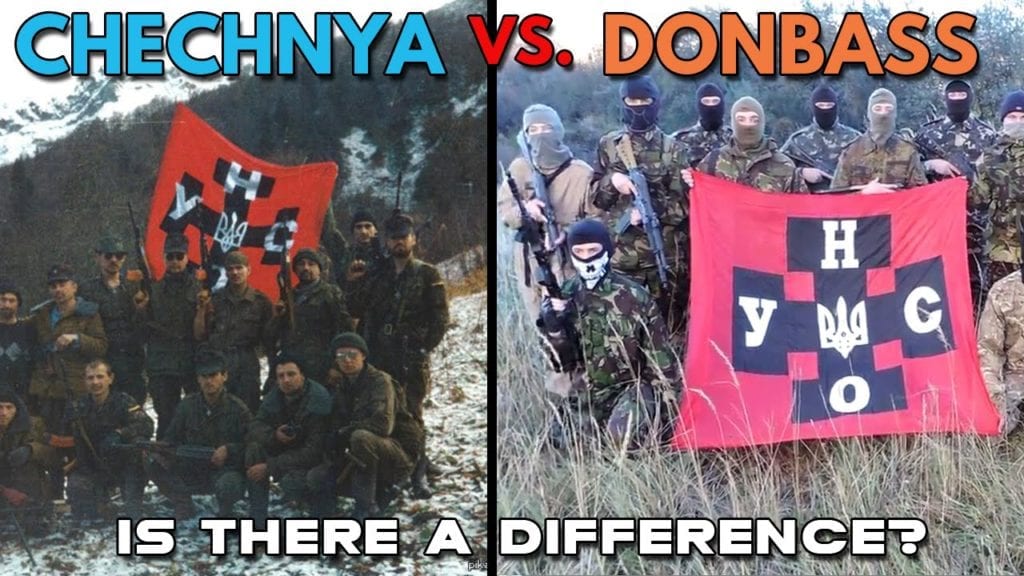
I have always insisted on the fact that these both war stages were strategically linked. It would be silly to believe that the Syrian situation has nothing to do with the stalemate in East Ukraine. Historically both areas are so-called “gateway regions” on the rimlands around the Russian dominated heartland as the US geostrategist Saul B. Cohen could demonstrate in his works. As the globalist geopolitics of the United States aims at preventing any Pan-Eurasian synergies in the Old World (or on the World Island to take over MacKinder’s vocabulary) or any long term cooperation between Central Europe and Russia, it’s quite natural to let organize by dubious proxies skirmishes or long term wars on territories that could have an important linking function between major regions on the Eurasian continent. The present-day Ukrainian territory East of Crimea linked Europe (represented by the Genoese and Venetian commercial bases) to Asia at the time of Marco Polo, the great Mongol Khans or even later. The Syrian coast was the entrance gate to the long land roads to India and China. The vital necessity to control it, lead to the eight crusades Western Europe waged during our Middle Ages (Spengler explained why the notion of Middle Ages is only valid for Europe).
Continue Reading
Posted in Geopolitika, English, Septentrion
Posted on 17/12/2010. Tags: Evropská unie, Wikileaks, Islám
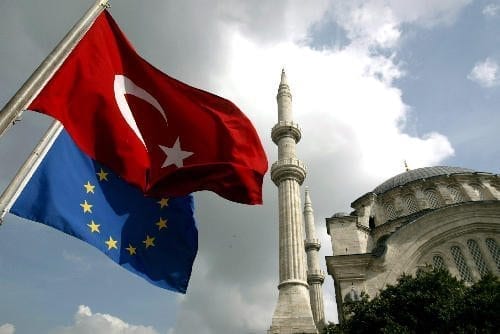
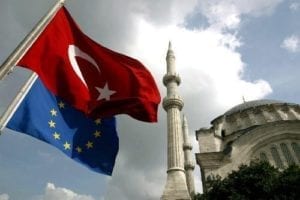 A quotes from Eric Edelman, U.S. ambassador to Turkey, 30 December 2004, published by Wikileaks:
ID: 04ANKARA7211
Dokument dato: 2004-12-30 05:05:00
Release dato: 2010-11-28 18:06:00
Kilde: Embassy Ankara
header:
This record is a partial extract of the original cable. The full text of the original cable is not available.
[…]
SUBJECT: ERDOGAN AND AK PARTY AFTER TWO YEARS IN POWER: TRYING TO GET A GRIP ON THEMSELVES, ON TURKEY, ON EUROPE
1. (C) Summary: PM Erdogan and his ruling AK Party seem to have a firm grip on power — if for no other reasons that there is currently no viable alternative and inertia weighs heavily in politics. Nevertheless, Erdogan and his party face enormous challenges if they are successfully to embrace core principles of open society, carry out EU harmonization, and develop and implement foreign policies in harmony with core U.S. interests. End summary.
Continue Reading
Posted in Geopolitika, Politika, English
Posted on 27/10/2010. Tags: Německo, Nacionální socialismus, Arno Breker
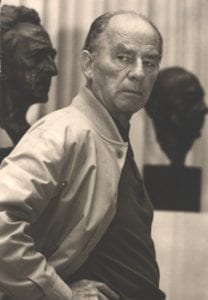 A historic interview conducted by Andre Müller in 1979 with Arno Breker, Hitler’s favourite sculptor
Artist Arno Breker became notorious as Hitler’s favourite sculptor during the Nazi years, when he took on commissions from National Socialist government, created heroic, monumental figures and led Hitler around Paris. The first solo show of his sculptures in Germany since World War II opened July 22 in Schwerin, prompting much discussion on how Breker’s works should be shown today (review here). On this occasion we have translated a lengthy interview with Breker conducted in 1979 by Andre Müller, one of the most respected interviewers of his generation.
Continue Reading
Posted in Převzato, Rozhovory, English, Septentrion, Kultura
Posted on 18/10/2010. Tags: Guillaume Faye, Arktos Publishing, Archeofuturismus
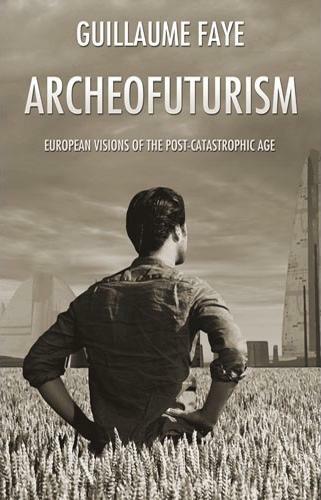
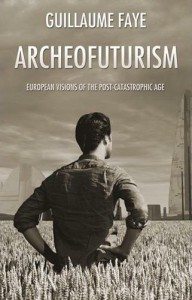 Archeofuturism, an important work in the tradition of the European New Right, is finally now available in English. Challenging many assumptions held by the Right, this book generated much debate when it was first published in French in 1998. Faye believes that the future of the Right requires a transcendence of the division between those who wish for a restoration of the traditions of the past, and those who are calling for new social and technological forms – creating a synthesis which will amplify the strengths and restrain the excesses of both: Archeofuturism.
Faye also provides a critique of the New Right; an analysis of the continuing damage being done by Western liberalism, political inertia, unrestrained immigration and ethnic self-hatred; and the need to abandon past positions and dare to face the realities of the present in order to realise the ideology of the future. He prophesises a series of catastrophes between 2010 and 2020, brought about by the unsustainability of the present world order, which he asserts will offer an opportunity to rebuild the West and put Archeofuturism into practice on a grand scale.
The book is avalaible directly from the publisher here.
Continue Reading
Posted in Zajímavé knižní tituly, English, Septentrion
Posted on 10/12/2009. Tags: Edgar Julius Jung, Konzervativní revoluce
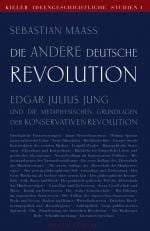 Edgar Julius Jung and metaphysical foundations of the Conservative Revolution
Edgar J. Jung (1894–1934) was the mastermind of the „Young Conservatives“ in the Conservative Revolutionary movement in Germany in the late 1920s and early 1930s. Jung’s voluminous work, The Rule of the Inferior (1927/30), in which he outlines his autoritarian weltanschauung, is a radical rejection of democracy and egalitarianism. Instead, Jung evokes the myth of the eternal Reich, the foundations of which he sees not in blood, like the Nazis, but in spirit.
But Jung was not content with giving intellectual guidelines. Quite the contrary, he intended to interfere in politics. Franz von Papen, the German vice-chancellor, for whom Jung wrote political speeches, seemed to be an ideal mouthpiece for Jung’s ideas. In Marburg, on June 17th, 1934 von Papen gave a speech which was of Jung’s making. The so-called “Marburg Speech“ attacked the German government and was meant to break loose a national conservative uprising.
Continue Reading
Posted in English, Dějiny ideologií, Septentrion, Zajímavé knižní tituly
Posted on 13/11/2009. Tags: Julius Evola, Arktos Publishing
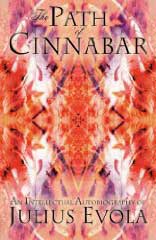 Not previously available in the English language, this is the first translation of Julius Evola’s autobiography, Il Cammino del Cinabro. The book provides a guide to Evola’s corpus as he explains the purpose of each of his books. This book is the key which unlocks the unity behind Evola’s diverse interests. It is a perfect place to start for those new to Evola’s thought, and a must read for all seasoned Evolians. The book includes hundreds of well-researched footnotes and a complete index. The book is avalaible here.
Book Description
Julius Evola was a renowned Dadaist artist, Idealist philosopher, critic of politics and Fascism, ‚mystic‘, anti-modernist, and scholar of world religions. Evola was all of these things, but he saw each of them as no more than stops along the path to life’s true goal: the realisation of oneself as a truly absolute and free individual living one’s life in accordance with the eternal doctrines of the Primordial Tradition. Much more than an autobiography, The Cinnabar Path in describing the course of Evola’s life illuminates how the traditionally-oriented individual might avoid the many pitfalls awaiting him in the modern world. More a record of Evola’s thought process than a recitation of biographical facts, one will here find the distilled essence of a lifetime spent in pursuit of wisdom, in what is surely one of his most important works.
Continue Reading
Posted in Zajímavé knižní tituly, Recenze, E-shop, English
Posted on 11/03/2009. Tags: European, EU
Author: Stanislav Maselnik
Denis de Rougemont was a main thinker of the so-called non-conformistes des années trente, a movement of young intellectuals that appeared in France at the morrow of the turbulent 1930s, in opposition to both individualism represented by liberalism and rising collectivism. [1] The main bulk of their work was published between 1930-34 and was concentrated around three separate currents.
Continue Reading
Posted in English
Posted on 08/02/2009. Tags: Bushido, Arnold J. Toynbee
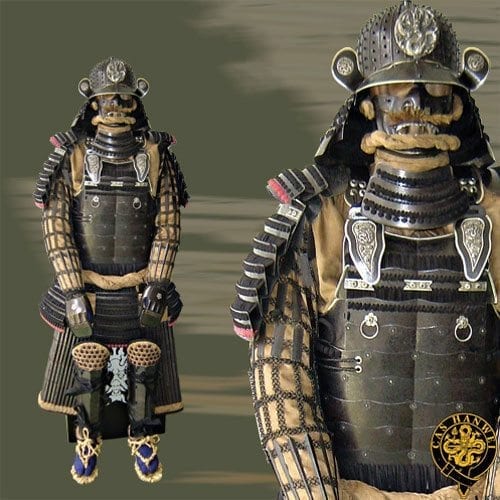 The Laws of the Military Houses
In the Roman Empire and other universal states in the days of their decline, attempts were made to arrest the course of deterioration by “freezing” an existing legal or social situation. The Tokugawa Shogunate in Japan was perhaps unique among universal states in applying this prescription of “freezing” from first to last and in achieving the tour de force of arresting change in the outward forms of social life (though not, of course, in the inward realities) over a span of more than 250 years.
Continue Reading
Posted in Historie, English
Posted on 17/07/2008. Tags: Rusko, Alexandr Zinověv, Robert Steuckers
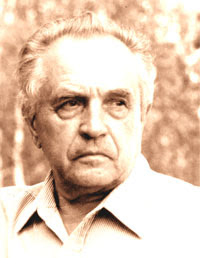 We all remember the great Soviet dissident Alexander Zinoviev, a lucid analyst not only of all the odds of the Soviet regime but also and especially of all the odds of the human soul, which lead unequivocally to all those forms of rigid totalitarianism. Today Zinoviev criticizes ”Westernikism” with an equal vigor as he criticized Soviet power before. “Westernikism” is in his eyes an American version of a Gleichschaltung of the human soul, which is equally mutilating as the former Soviet version. Because he formulated his sharp critiques under Breshnev’s Soviet Union, he was deprived of his Soviet citizenship in the Seventies. Zinoviev was compelled to live a long exile abroad, in Munich in Bavaria, a City which gave a safe harbour to many more Russian emigrations.
Continue Reading
Posted in Rozhovory, English


 ***
*** ***
*** ***
***
Nejnovější komentáře